Saturday, April 30, 2011

Hebron: Under Siege from Within

Hebron is one of the oldest continually inhabited cities in the world and should be a tourist goldmine, but Hebron’s got problems, big ones. In 1929, 67 Jews were murdered and over a hundred where injured by 1000s of rioters from Hebron and the surrounding villages reacting to the influx of Jews to Palestine sparked in part by British Foreign secretary Lord Balfour’s generous offer of a state in 1917.

After the riots, the British rulers of Palestine moved the remaining Jews in Hebron to Jerusalem, ending centuries of continuous Jewish inhabitation of a place which contains the purported resting place of Abraham, father of the monotheistic religions.  Jewish settlers started to come to the town after it was occupied by Israel in the war of 1967, seeking a return to one of the spiritual epicenters of Judaism.

The EAPPI programme is the one of a host of international organizations who come to provide a protective presence in a divided city. The Hebron Protocols of 1994 put 140,000 of the Palestinian population under the control of the newly formed Palestinian Authority control while 30000 Palestinians and 500 Jews in the oldest part of the city remained under full Israeli military control. The part of the city under Israeli military control is known as H2.

A priority of the army in H2 is to protect the 500 Jewish settlers who have moved into Palestinians homes either by force or by paying grossly inflated prices for properties. Many live above top of a narrow marker street leading to the Ibrahimi mosque. Here above the street there are grills in place to stop the rubbish settlers throw out their windows falling on the heads of Palestinian traders and their customers.

In 1994 The Ibrahimi Mosque was the site of a massacre when Baruch Goldstein, an American-born Israeli doctor, opened fire on Muslim worshippers, killing 29 and wounding 125. Harsh security measures were imposed on Palestinians in the wake of the violence which followed the shootings. Since that time, through various failed piece initiatives and a Palestinian uprising the measures have tightened and have resulted in the stagnation and decline of the local economy

One of the tasks of an Ecumenical Accompanier is to stand entrance to Ibrahimi mosque and monitor the passing of Palestinians as they enter on a Friday to pray. At the entrance to a mosque, cages and electronic turnstiles, operated by soldiers control the movement of Palestinians. A further set of turnstiles manned by soldiers is in place at the entrance to check the IDs of the Palestinians.

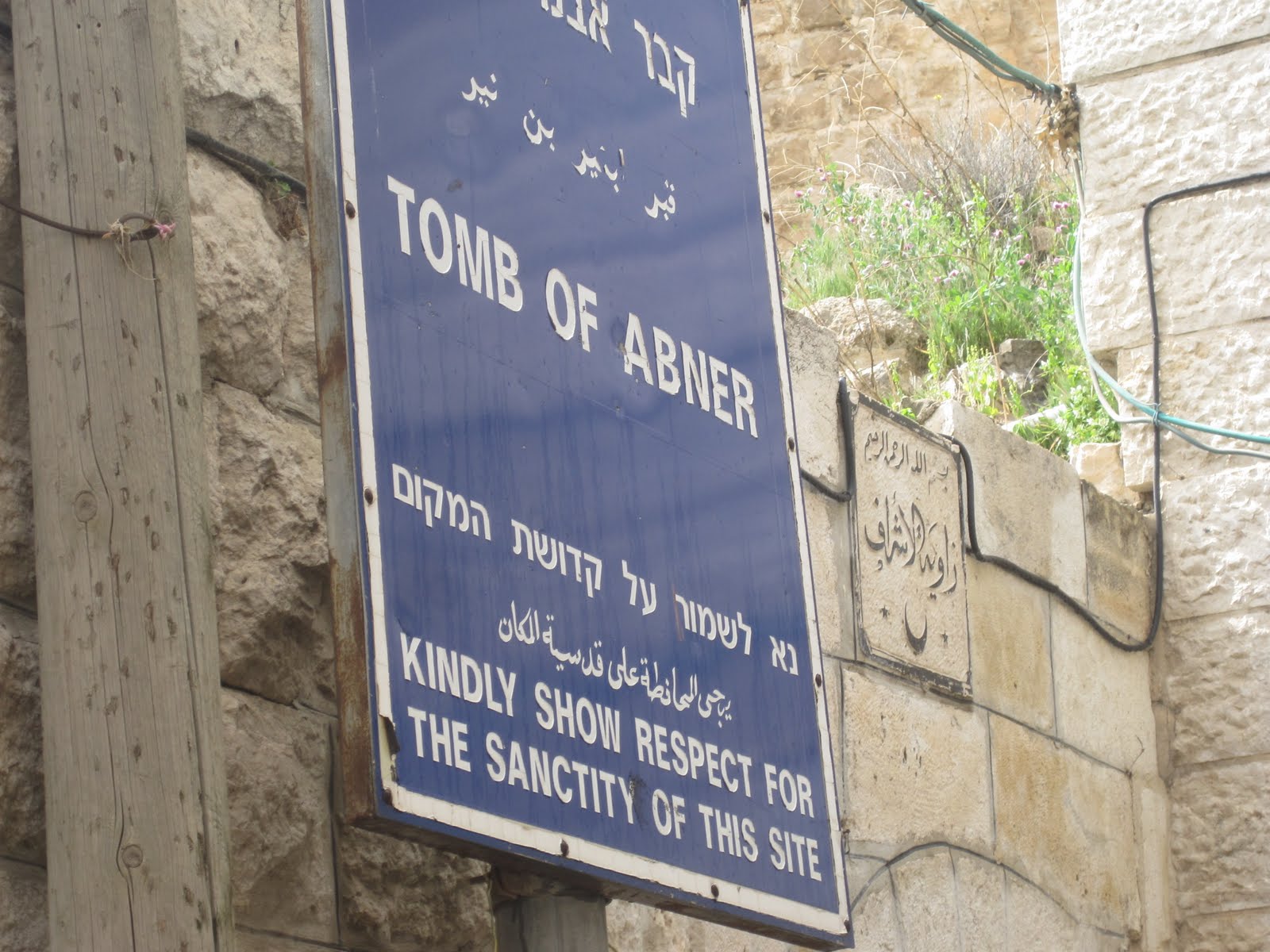
As I stand there I observe a soldier cock his gun to the head of 10 year old Palestinian boy as his colleague looks on in amusement. A sign to his right says in Hebrew, Arabic and English, marking the entrance to the adjacent tomb of Abeer (a holy Jewish site) says “Kindly show respect for the sanctity of this site.” It seems like a cruel joke.

Close to the entrance of the mosque, Abed and his son Mohammed sells trinkets to passersby. Abed’s business is dying, but he talks easily with and with a smile on his face to the soldiers, who are in the process of barring the entry of a 15 year old boy who used to work is his shop when Abed could afford to have paid help. Shuhada street, a few hundred yards away has been closed to Palestinians since the Ibrahimi massacre. It means his business has suffered greatly. He has been offered 10 times the price of his shop from settler groups but refuses to take the money.
Shuhada Street in one of H2s main thoroughfares, but the perversity of its closure to Palestinians due to massacre by a settler is somehow lost on the town’s Jewish population, who walk defiantly up and down the desolation, leaving graffiti saying “no mice or Arabs” and “only Jews sell to Jews” on the welded shut metal hoardings at the front of building which were once at the centre of the West Bank’s economy.

The closures in Hebron are working. Since 2000, 20,000 Palestinians have left the city. According to a study by the International Committee of the Red Cross (ICRC), conducted in 2009, 77 percent of the Palestinians in Hebron's Old City in H2 live below the poverty line. This is an extreme form of structural violence, whereby Palestinians grow more impoverished and alienated by the military endorsement of an aggressive form of colonization based on the religious fervor and frequent violence of the settler minority.

One of the jobs of the 2000 or so soldiers in Hebron is accompanying settler tours of the Old City where Jewish sympathizers from all over Israel and the world get a private tour of the old city with complete army protection. When we follow one, kept out of earshot and threatened with arrest on several occasions the soldiers seem to be particularly fearful of Palestinian children as they play on the streets and peer out of their windows; as one of the soldiers said to me with serious urgency “little ones become big ones”. He was only a kid himself, no older than 20.


H1, which is supposed to be under Palestinian control, also contains patrols of  Israeli soldiers who police neighbourhoods were a number of violent settlers have moved in. In Tel Rumedia settler harassment has forced Palestinians to seal their front doors and access their homes through rooftops, ladders and back alleys out of harm’s way.

At the home of Mashim, we climbed into his backyard down a ladder and listened as he told us how a notorious settler activist, Yvette Shakin had finally been arrested and charged after years of physical and verbal abuse directed at her Palestinian neighbours. She had attacked his nephew, grinding a stone into his mouth. It had been the Jewish holiday of Purim the week before and he showed us a video of settlers celebrating it on the street outside of his house, chanting “death to Arabs!” with soldiers standing beside them, keeping the peace.

“Debased”, “degraded” and “inhuman” are some of the words which Israelis use to describe the acts of terrorism inflicted upon them by Palestinians. They also accurately describe the actions of settlers in Hebron, but such self awareness is sadly beyond this section of Israeli society. Prominent figures in the Israeli government, including former Prime Ministers have been strong in their condemnation of the actions of hard-line settlers in Hebron, saying they do not represent Israeli society, but instead shame it. This condemnation seems contradictory in the light of a high intensity, crippling military occupation which seems to protect and support the Jewish residents and a government policy which legislates against settlers as civilians and Palestinians under military law.
I left Hebron after two days with one solitary cause for hope. At a protest against the closure of a nearby village I watched a middle aged Israeli woman remonstrate with soldiers for over an hour, trying with all her might to make the young men see the fault in what was happening. She had a son about to leave home for the army. “The worst thing is,” she said to me, “is that they must believe in what they are doing”.
When Lord Balfour made his declaration in 1917 which supported the formation of a Jewish state in Palestine it contained the proviso that “nothing shall be done which may prejudice the civil and religious rights of existing non-Jewish communities in Palestine.” 93 years later, Hebron is an extreme example of how this guileless and naïve promise has been forgotten. It is testament to the arrogant and lofty ideals of imperialism and the damage they leave behind.
I work for Quaker Peace & Social Witness (QPSW) as an ecumenical accompanier serving on the World Council of Churches’ Ecumenical Accompaniment Programme in Palestine and Israel (EAPPI). The views contained in this email are personal and do not necessarily reflect those of my employer (QPSW) or the World Council of Churches. If you would like to publish the information contained here (including posting it on a website), or distribute it further, please first contact the QPSW Programme Manager for I–oPt teresap@quaker.org.uk for permission.

Occupation: As Easy as A, B and C

Abu Ayl stands with us on the roof of his house in the picturesque West Bank Village of Far’ata. The landscape around us is spectacular: behind us to the west in far the distance -inaccessible to West Bank Palestinians- is a shimmering golden band of Mediterranean sea and the fertile plains of Israel; to the south, rows of olive covered hills slalom towards the large Israeli settlement of Ariel, which runs the length of the finger shaped mountain marking the horizon about 10 kilometres away. A mile away to the north east, the pretty, developed and prosperous looking Israeli settlement of Qedumim nestles in the hills amongst pine trees. Around us are the Palestinian villages of Immatin and Far’ata.  Abu points towards  the Israeli settlement outpost of Havat Gil’ad around ½ a mile to the east.
Abu Ayl

“These caravans are new,” He says, pointing to some structures at the edge of the loose cluster of shacks and buildings; “They were not there a few weeks ago.”
Abu Ayl owns land over the brow of the hill just in front to the Havat Gil’ad outpost but is not allowed to access it except for two days in a year and only then under Israeli army supervision. The day before meeting us he had went to his land where Israeli soldiers were posted to prevent Jewish settlers attacking him. He found 150 of his olive trees had been taken down by chainsaw. The soldiers looked on as he returned to his house and came back with a camera to record the damage. As he took pictures a solider came over to him and asked him:
“How does this make you feel?”
“Angry. I want to do something about this...it hurts that I can’t do anything.”
“I don’t blame you.” the soldier said; “I’d feel the same”
An example of the damage done to Abu Ayl's 50-100 year old Olive Trees

We look across at the Havat Gil’ad outpost. Except for the electricity cables running out of it along the hill tops towards Qedumim its collection of tents and caravans look like the setting for a Western movie. It is occupied by extremist settlers who believe they have a God given right to occupy any land in the area they refer to the “Jewish Heartlands” of Judea and Samaria, and which the rest of the world knows as the West Bank. The outpost (like all settlements here, even the plush Qedumim to the north-west and the 20,000 strong urban block of Ariel to the south) is illegal under Article 49 of the 4th Geneva convention, but outposts such as this (of which there are over 100 in the West Bank) are illegal even under Israeli law and as such should not be provided with civic services. Havat Gil’ad has been there since 2001; despite its illegality the villagers in Far’ata say the Israeli authorities supplied it with electricity, water and sanitation within days of its construction.
The West Bank is partitioned into 3 areas as a result of the Oslo Accords in 1993. Under the Oslo Accords a newly formed Palestinian Authority was given control of area A and a degree of joint authority over Area B. Area C would remain under full Israeli Military control for a transitional period before being “gradually transferred” to the Palestinian Authority. Abu Ayl’s land is in Area C, which, according to The United Nations Office for the Coordination of Humanitarian Affairs, takes up 62% of the land area of the West Bank. Area C holds about 1/6th of the West Bank’s population, the rest of which is concentrated in urban blocks in Area A and villages in Area B. Patches of Areas A and B are separated from one another by Area C’s strips of Israeli settlements and the roads which connect them. Life in area C is hard if you are not a settler; Save the Children recently published a report saying that the development of children in parts of area C is worse than anywhere in the occupied Palestinian territories, including Gaza.
The Oslo Accords, which fragmented the West Bank into these areas was supposed to be an historic first step towards achieving Palestinian statehood and a lasting peace with Israel. It turned into a disaster for Palestinians. The transitional period and gradual transfer never materialised; instead the Accords marked the beginning of a period which  prompted the Second Intifada (which according to Israeli Human Rights organisation B’Tselem cost upwards of 6000 lives up to the end of 2008, almost 5000 of those Palestinian); the subsequent construction of an separation barrier, (85% of which is built illegally on Palestinian land and which has B’Tselem says has exasperated the impoverishment of many Palestinians in the West Bank) and  the transfer of almost 200,000 Israelis into area C , adding to the 100,000 already there and a further 200,000 who now  live in East Jerusalem. This created what Ariel Sharon called “facts on the ground”: Human and concrete obstacles to a unified, economically viable Palestinian state. Many Palestinians and Israelis see Oslo as having failed, but the fragmentation of the West Bank into area’s A, B and C (a part of the deal that was supposed to be temporary) has become a feature of life since.
Famers like Abu Ayl, who own land close to settlements and their outposts, are often barred from freely accessing their land. There is danger of being attacked by violent settlers. Rather than punishing the criminality of settlers, the Israeli authority chooses to punish the victims by restricting their movement.
Part of Abu Ayl’s modest income comes from the olive harvest. As a result of the vandalism, this year and in the years to come there will be no income from that.
Though working against the law, settlers who populate the outposts such as Havat Gil’ad advance the cause of the settlement project envisioned by Sharon and other Jewish Nationalists. They are the “facts on the ground” and are often violent, uncompromising, and allowed to attack, intimidate, frighten and hurt Palestinians by a military authority that is unwilling to hold them to same rigorous account as it does Palestinians.
Standing on the roof-top in the sunshine, I ask Abu Ayl if we can go to his land to see close up. He smiles ruefully and shakes his head:
“The settlers came into the village last night with soldiers; they walked around and went home...they want to show us they can go anywhere. We cannot go to my land; it is too dangerous for you.”
I protest: It’s his land; surely we can go and keep our distance?
 “Listen,” he said; “A few years ago they attacked my son, they broke his hand, fractured his skull, when they saw him again a year later, they asked him; what are you doing here? Last time we broke your hand and head; what do you think we will do to you next time?”
The Outpost: Illegal under international law, Illegal under Israeli law but with amenities provided by the Israeli authorities. Go figure.
As we stand in silence and look out again at the Havat Gil’ad Outpost, I wonder again at the similarities of this place to the Wild West; at the existence of such ugliness amidst such beauty and how those who claim to be chosen and guided by God can act in this way.
I work for Quaker Peace & Social Witness (QPSW) as an ecumenical accompanier serving on the World Council of Churches’ Ecumenical Accompaniment Programme in Palestine and Israel (EAPPI). The views contained in this article are personal and do not necessarily reflect those of my employer (QPSW) or the World Council of Churches. If you would like to publish the information contained here (including on a website) or distribute it further, please contact the QPSW Programme Manager at  teresap@quaker.org.uk

Saturday, April 9, 2011

"For I Love the Bones of You..." The Israeli Prison System and it's effect on detainees and their families

Every Tuesday morning a line of plastic chairs is set outside the International Red Cross Offices in Tulkarm. A group sit and hold pictures of loved ones in front of them. These are the families of Palestinian prisoners. One of an Ecumenical Accompaniers tasks is to stand with them and offer our support. This morning we speak to the protesters as a camera crew from a local Palestinian News station conducts interviews. I speak with Hamed from the Palestinian Ministry of Culture, he translates the story of one mother who waited 1 ½ years to see her son in prison, when she got there the prison guards shackled her legs before letting her go in to see her son.


Since the beginning of the occupation in 1967 it is estimated that 650,000-800,000 Palestinians have been arrested and detained. Some estimate that 20% of the Palestinian population has been in prison. If you look at just the adult male population the figure rises to 40%.

The mass imprisonment of Palestinians is not without cause: The wave of violence known as the Second Intifada took place from 2000 onwards included suicide bombers and cost more than 600 Israeli lives. The uprising led the detention of more than 40,000 Palestinians, including 3000 children. Israeli Ministry of Foreign Affairs highlights Tulkarm as being one of the sources of the violence. Things have calmed now, but the Palestinian Bureau of Statistics estimates that over 7000 Palestinians are currently incarcerated.

Abdi Dalbah is a Palestinian activist and Journalist who works with Palestinians, Internationals and Israelis in opposing the occupation, he spend time in prison for political activism in the late 1990’s. I asked him how long he was in for: “Short time” he says “6 years”.

Abdi has been in prison twice, although he jokes that he was actually in 3 times, once the Israeli authorities raided his home only to be told be his family that he was already in jail. They found him where they had left him and promptly arrested him again. When I asked if he was ever tortured he answers, “Yes, of course”;

Abdi speaks with humour, patience and grace about his time inside but his eyes flicker as he recalls the ordeal. Some of the methods of torture used on Adbi included sleep deprivation, prolonged period spent in the cold, hanging by the hands, beating of the legs, tying of hands behind the back and arching the back over a stool until “you feel your back is broken”. He claims other methods of torture that he heard about include electric shock and spiking food with hallucinogenic drugs. “they also locked me in a toilet for days instead of cell, under law the Israelis are obliged to provide 3 meals a day and 4 cigarettes, so they brought me food to the toilet, I didn’t eat it.”

The Israeli authorities even keep corpses in prison, Abdi tells the story of a mother whose son (Mashoir Arori) died in prison in 1981. A few months ago, after 30 years of struggling with the Israeli prison system, his body was released. The mother’s relief was short lived, DNA tests of the skeleton revealed is wasn’t her son. A few months later, after yet more struggles with Israeli bureaucracy the true remains were finally returned to the village he grew up in. The Palestinian Minister of Prisoners’ Affairs knows of 300 corpse held in Israeli jails for no apparent reason.

A 2007 report by Israeli Human Rights organisation BT’selem claims that torture was still a regular occurrence in the Israeli prison system. They cite beating, painful binding, swearing and humiliation and denial of basic needs. In addition, 100s of Palestinians prisoners are currently held under an emergency procedure known as administrative detention. This allows the Israeli prison system hold suspects for concurrent periods of 6 months without trial or any knowledge of their alleged crimes. It has resulted in 1000s of Palestinians in jails for up to 5 years with no charges, and no knowledge of what they are in for. Both torture and administrative detention are very basic denials of human rights and contrary to international law. Plenty of evidence exists that they happen, but Israel simply isn’t held accountable by anyone.

The Israel Prison Service website describes itself as “ensuring the incarceration of prisoners and those remanded in custody in a secure and suitable environment, while respecting their dignity”. In fact it is discriminatory and willfully neglectful of the normal legal checks and balances which exist to protect prisoners in most Western democracies. This is due to the status of the West Bank as an occupied territory; military law rather than civil is applied. This allows for the detention of prisoners for smaller crimes for a much greater length of time, and allows the scandal of detention of minors to persist. While Palestinians who are arrested come from the Occupied West Bank or Gaza, most of Israeli detention centres are within Israel, this means that families trying to visit loved ones have to get a permit to travel from the West Bank to Israel, the same is true for lawyers looking to represent their clients. Not only does this cause massive problems of access for prisoners, it is also illegal under article 47 of the 4th Geneva Convention.


For Palestinians, the Israeli prison system represents a tragedy on a national scale. A generation of Palestine’s men has been scared by their time in prison. In Tulkarm, the pictures of those still incarcerated hang alongside those of the martyrs almost everywhere you go. They look directly, defiantly at you, a younger version of themselves staring out from a fantasy world where they thought they might have freedom. Just as Israeli teenagers are brutalised by conscription, so it seems that Palestinians have their lives tainted by imprisonment. It is one of the many indignities they face under occupation. Communities mourn the absence of children, men, women and even the dead.


Sunday, March 27, 2011

Sick Murder means Bricks and Mortar for Israeli Government

The following article was published in the Andersontown News on Thursday the 24th of March and was written on the 15th of  March in the days following the Itamar Murders near Nablus in the West bank. It questions the moral leadership of a government who would so readily jump on an unsolved murder case to further it's construction of illegal settlements in the West Bank and criticises the journalistic standards across Israel and the world which seem to be entirely complict in a process which aims to demonise Palestinians in the most insidious and cynical fashion.

This weeks bomb in Jerusalem (wihich killed one and injured 30) is on my mind and my heart as I post this, as are the deaths of around 14 in Gaza, in the last 10 days (http://news.xinhuanet.com/english2010/world/2011-03/27/c_13800589.htm) and all those deaths happening around the middle east at this time that are not considered "hot topics" by news editors both here and at home.  

Horrific Murders Leads to Misery for Palestinians (15/03/11)
The world views Israel and Palestine through thick and foggy lenses. Horrific and terrifying events close to Nablus in the Northern West Bank brought this to light this week. The stories behind the often bloody events in this most media exposed corners of the earth get condensed and packaged into bite size pieces for easy consumption. Both spin doctors and news editors play on this; a careless-or clever- word here and there changes the complexion of the story and distorts the picture. They rely on others’ natural biases or limited knowledge of context to frame an event in a way that suits purpose. Often, vested interests on both sides use tragedy to give weight to political and social agendas in what can seem like naked opportunism out of step with human grief and suffering. 
In the early hours of Saturday the 12th of March 5 members of the Fogel family from the illegal Israeli settlement of Itamar were murdered in their beds. An attacker entered their home at night and stabbed to death a mother, a father and three children including a 3 month old baby. The result was shock and outrage throughout Israeli society. Israel's most popular daily paper, Yedioth Ahronoth, ran a front page story calling the killers "Human beasts" in the sub-heading that ran beneath the victims' photographs.
While Mahmood Abbas, the Palestinian Authority President, described the attacks as inhuman, the main Palestinian news site Maan News, chose to question why the settlers were in the West Bank in the first place; they also asked “where (were) the almost 200,000 Israeli police and soldiers charged with enforcing the occupation were when the attack happened.”? The remark echoed the Palestinian and International consensus and indeed International Law regarding the destructiveness and danger of the settlement project, never the less it seemed callous in the wake of such an atrocity.
This is a place where tribal lenses blind the human dimension to a story time and time again. “United in Grief” is not a viable headline here. Throughout Saturday, in press pages across the world, the Itamar murders made headlines alongside the devastation in Japan. On the BBC News and other pages the attackers were branded “Palestinians”. This was despite the fact that the act was that of an unknown murderer. There were suggestions that it was the work of a Palestinian militant group called Imad Mughniyya Group but a statement from them claiming responsibility did not match incident reports and was followed by a denial. Questioned remained as to how any attacker would have got into the heavily fortified settlement without detection. While the remaining members of the Fogel family grieved, on the streets of Nablus and the Palestinian villages surrounding the city the primary reaction was one of fear and incredulity. In the hours that followed their fears were realised.
During Saturday, all roads in the vicinity were blocked crippling the movement of Palestinians. Between 20-50 Palestinian men were arrested and detained in the villages surrounding Itamar, many houses were ransacked and possessions destroyed. Curfews were imposed on whole villages, with residents not permitted to leave their homes from Saturday on into Monday morning. One of the men arrested was the 16 year old son of Mohammed Kamel Kawareek; the main reason for suspicion was that his brother had been one of two Palestinians killed by either the Israeli Army or settlers in mysterious events which followed his arrest a few months before. No investigation or arrests were made after those killings, with the army and settlers giving conflicting reports as to why the teenagers had been shot multiple times in the head and back.
Mohammed Kamel Kawareek and his wife in the Wake of their son's arrest, behind them a picture of their murdered  son. Photo Petter Lynden

Days before these events on Monday 7th March, 4 Palestinian villagers close to Itamar were seriously injured from gunfire from both settlers and the Israeli Defence Forces following a settler invasion of Palestinian land. A 15 year old was rushed to hospital with a bullet hole through his kidney and a further 3 had surgery after sustaining bullet wounds. After trouble started the soldiers who were called in the wake of the settler attack and fired live rounds into a group of Palestinians coming to assist those driven from their land and injured by settler violence. Soldiers then stood with settlers as ambulances were called to assist the injured Palestinians.
According to the Israeli Human Rights organisation, B’Tselem; “when Israeli civilians attack Palestinians, the Israeli authorities employ an undeclared policy of leniency and compromise toward the perpetrators.”  Leniency and compromise were not employed in the weekend response to the Itamar murders; dozens of Palestinian men were in prison, and life in many villages was paralysed. Israel has used collective punishment regularly in the past; but in this case, what had any Palestinians done to deserve punishment?
A little reported fact in the world’s press is that since the last fatal attack on settlers in the West Bank in September 2010, at least 41 Palestinians have been killed by the Israeli Army in the area, while a further 85 Palestinians have been injured and 4 killed by settlers. On Sunday, a day after the murders, the Israeli government announced that as a direct result of the murders 500 new homes are to be built in illegal settlements in the West Bank. Yesha, a settler group called the move a step in the right direction but added “It is deeply troubling that it requires the murder of children in the arms of their parents to achieve such an aim.”
By Sunday evening, many more Palestinians had been detained including all the male inhabitants of an entire village. Settler violence all over the West Bank was on the increase. The Israeli press quoted their prime minister as urging settlers, despite their pain, not to take the law into their own hands. However, reports suggested that in some areas the laws was with them, with the military joining settlers in attacking Palestinian villages under the pretext of intervention in the violence.
On Monday evening, Palestinian news sources reported authorities in Itamar had started rounding up Thai immigrant workers in relation to the case. A Thai worker who was owed 10000 Shekels by the murdered father Udi Fogel had threatened to kill the family if he wasn’t paid. The development went unreported in the Israeli press, and indeed the world press, with millions of people still under the impression that the murder was carried out “Palestinian militants”. Should the murderer turn out not to be Palestinian, will the pain of the remaining members of the Fogel family become less relevant to the Israeli government? Will the government retract its plans for more illegal homes to be built in the West Bank? Will the media (Israeli and worldwide) apologise for jumping to the wrong conclusion? Will the army compensate those Palestinian families whose lives have been turned upside down? It seems unlikely in a place where grief is a politician’s asset. It fell to Motti Fogel, brother of the murdered father Udi Fogel to say by his graveside that his death should not be used “as a symbol or a national event”, but no one was listening anymore. In a propaganda war, it seems that those who stoop lowest get the spoils.

Saturday, March 12, 2011

Jerusalem: The Suffocation of Shared Space

 A New and Old Jerusalem
In Jerusalem, tourist buses cart their cargos around, the faces behind the glass take in the sights and a lifetime of dreams of the holy city gets realised before their eyes. The EAPPI group took a tour of the city this week, but we are not tourists and this was not your normal tourist bus tour.
East Jerusalem lies in the West Bank, to the east of the green line which marks the limit of the Israeli state prior to the 1967 war. The area to the east of the Green line is still classified as occupied, but take a walk in the historic centre of Jerusalem and you could walk over the Green line without even noticing. Today part of it is marked by a brand new tram line -not unlike the Luas in Dublin- which runs by the walls of the Old City and out into the suburbs.
East Jerusalem is supposed be the capital of any future Palestinian state. Today it lies completely within the municipality of Greater Jerusalem and under Israeli control. A Palestinian living elsewhere in the West Bank needs a permit to travel into it. The vast majority are unable to obtain this. If you are a Palestinian living in East Jerusalem must carry a permit at all times while walking the streets of your hometown or run the risk of being arrested and detained by the police or the military, but this is not really news, it happens all the time.  
Our bus tour took us from the affluent, manicured West Jerusalem City Centre into the heart of East Jerusalem. Our tour guide, Angela Godfrey Goldstein (an Israeli peace activist) would have liked to take us into the Al Bustan district but safety concerns meant that we could not go. Al Bustan is currently a pretty tense place; it is subject to 1500 house demolition orders for homes the Israeli government claims are illegal, this is despite the fact that many of the homes were built pre 1967 when Israel had no authority over the area. Tensions are particularly high this week because a demonstration a few days earlier had resulted in the death of a 2 year old girl through tear gas inhalation.
The residents of East Jerusalem are mostly Palestinians, except for a number of pre-existing Jews and new Jewish settlers who live in heavily fortified houses built on the site of homes owned by evicted Palestinian tenants.  Those Palestinians who work pay taxes and national insurance to the Israeli state, they are entitled to benefits but according to Angela Godfrey Goldstein anything they get they usually pay back in fines. She continued; “despite the fact that (the Palestinians) pay rates and taxes not a single new road has been built in East Jerusalem since 1967”. The streets of East Jerusalem are littered with skips filled with the smoldering remnants of burnt rubbish. Many Israelis and tourists who find themselves in the area assume the Palestinians like to burn their own rubbish. In fact they are not provided with sufficient refuse collection to cope with the waste. They also cope with erratic water supply and are compelled to construct black water storage tanks on the tops of the houses so they can live when the water is turned off. According to the mayor of Jerusalem, there’s no problem, since the Palestinians like the security of “water on the roof over their heads”. The reality is that Jerusalem doesn’t seem that interested in providing basic services for the Palestinian populace.
The same Mayor, Nir Barkut aims to turn the Al Bustan district into a tourist amusement park themed on King David. A recent opinion piece in the main stream Israeli paper Jerusalem Post applauds the mayor for his vision for the economy despite the “always tough” demolition of homes.  Some within Israeli society think that the people in East Jerusalem need roofs over their heads more than they need an amusement park. For the Palestinians, it is just another chapter in a process that has been ongoing since 1967. According to the Israeli Committee against House Demolitions, the organization Angela Godfrey Goldstein works for, 24,000 homes have been demolished in the West Bank since the start of the occupation.


A Palestinian Girl faces a bulldozer on its way to a demolition

The bus moved out of East Jerusalem and onto a new highway which took us even further into occupied Palestinian Territory and into the new settlement of Ma’ale Adumim (The Hill of Olives). This area, planned by the Israeli government, built in large part by Palestinian labour and illegal under international law is an impressive suburb replete with lush green gardens; wide, palm lined avenues; sparkling new apartments and an educational institution which works with organisations such as NASA in the development of space age war technology. Its name resonates in the beautiful thousand year old olive trees which adorn roundabouts in the settlement. These we’re uprooted from confiscated Palestinian land and transplanted to give the area that all important touch of heritage.
The development is populated by Israelis who are economically incentivised to live there. It is part of a plan to encircle Palestinian East Jerusalem with new settlements and create “facts on the ground” which separate the Eastern part of the city from the rest of the West Bank.
In the distance beyond the Ma’ale Adumim the separation barrier winds its way along hilltops, creating to ultimate obstacle to movement between East Jerusalem and the rest of the West Bank, beyond that, in the far distance you can see the hills of Jordan and the Dead Sea basin. Ma’ale Adumim is one of the last stops on the brand new, soon to be operational tram line which runs along part of the green line by the walls of the old city some miles to the West.

Uprooted Olive Tree in Ma ale Adummim
Former Israeli Prime minister and notorious military commander Ariel Sharon was quoted as saying over 30 years ago “we’ll make a Pastrami Sandwich out of (the Palestinians). We'll insert a strip of Jewish settlements in between the Palestinians, and then another strip of Jewish settlements right across the West Bank, so that in twenty-five years' time, neither the United Nations nor the United States, nobody, will be able to tear it apart."
Today Ariel Sharon lies in a sick bed (comatose since suffering a stroke in January 2006) but his vision for a fragmented West Bank has been realised in bricks, mortar and Israeli only highways. In pursuing their policy of fragmentation of the West Bank, Israel has repeatedly broken the articles 49 and 53 of the 4th Geneva Convention relating to the transfer of populations and destruction of property in an occupied territory. However, without political pressure these laws are meaningless. The hope that Jerusalem will one day be a shared city for Jews, Muslims and Christians alike is getting strangled.  Meanwhile the Palestinian proportion of the population of the city (current at around 35%) continues to rise; without permission to build houses, and with the threat of existing homes being torn down, the future of the Palestinian community in a shared Jerusalem looks bleak and tubulent.

Thursday, March 10, 2011

Mohammed and the Distant Ocean

Ireland has a heart for Israel and Palestine. It is written on the walls, it flies from the flag posts, it is in the minds and mouths of Irish people. The two areas have something common; an understanding of conflict and a desire for a just peace which in the case of Northern Ireland often seemed long way off. In Israel and Palestine today peace seems a very long way off; it is a heavily militarized area with stark social divisions and immense hatred and resentment between Jews, Christians and Muslims.

Both Israeli and Palestinian civilians are victims in an ongoing political power struggle which aims to define the limits of the Israeli state and the shape of any future Palestinians one.  They do not live on an equal footing. Israelis enjoy much greater economic circumstances, powers of self determination and much wider range of rights and freedoms. One message I have taken from the Palestinians I have spoken to since coming here was that if they could have one desire in their quest for justice in the Holy lands it would be that all the people in the world could visit and experience the reality of life under occupation. That way, they are sure, people would do more to try and help them live freely and fairly with their neighbors in Israel.

The Palestinians understand our recent troubles, as do the volunteers from all over the world who comprise this group of human rights observers of the World Council of Churches Ecumenical Accompaniment Programme to Israel and Palestine. To them, we are an example of how peace can be won, we are an example that gives hope. Hope is a scarce commodity in the Occupied West Bank at the present time, but as Samar, a Palestinian lady from the town of Tulkarm put it to me, “we hope that one day we will have hope”.

Ecumenical Accompaniers (EAs) provide protective presence to vulnerable communities, monitor and report human rights abuses and support Palestinians and Israelis working together for peace. The programme is coordinated by the World Council of Churches and has been present n the area since 2003 when the second Intifada was claiming many lives on both sides of the divide. When they return home, EAs campaign for a just and peaceful resolution to the Israeli/Palestinian conflict through an end to the occupation, respect for international law and implementation of UN resolutions. In our advocacy we aim to tell the stories of people under occupation, here is the first one

Last night we had a welcome/farewell party for departing EAs, the new group and the local contacts we rely on to do our job. One of the many people we met there was Mohammad. Mohammad is 15 and is a resident of Tulkarm refugee camp which is run by the United Nations Relief Works agency. Three generations ago his family were forced from their homes by a war which created 700,000 refugees. His family lived in Haifa, a former Palestinian town on the Mediterranean. Mohammad would like to be a nurse when he grows up and possibly travel to Russia where he hears they need nurses. From the hills above his refugee camp home, on a clear day you can barely see the ocean 9 miles away beyond the high rise buildings which line the sunny coast. He would one day like to go there, but can’t.

As a Palestinian Mohammad doesn’t have the right to cross the border between Israel and the West Bank. The West Bank has no coastline. The high-rise buildings, the beaches, and the sea all lie in Israel. Some refugees return to Israel but only as daily economic migrants. Those  who do make the trip face heavy restrictions on movement, often bewildering obstacles to obtaining the necessary permit and humiliating checkpoint procedures as they travel each day to generally low paid jobs which they need to feed their families. They don’t get to the beach on their days off. Mohammad cannot even realistically expect to return to the seaside home from which his forefathers were driven from, not even for a visit. Israelis live in or on the site of the house that used to belong to his family. He has no right of return.

In Jerusalem, town planners and legislators plan on clearing large swathes of East Jerusalem, the area of the city inhabited by Palestinians , so that Israelis can return to where they say their forefathers used to live to help cement the dream of a Greater Jerusalem in a Jewish state. The EAPPI programme and the people who work on it recognize this injustice and want to do what they can to make it possible for Mohammed to have his rights recognized in a solution arrived at through inclusive, peaceful negotiation. This way, we hope to bring the ocean a little closer to him.  


    Some Kids from the nearby village of Kufr al abad, barred from the beach by Israeli Security measures
    
    Donkeys: Generally peaceful
    Welcome Rain Blows in from the Mediterreanean 10 miles to the west of the Hills above Tulkarm
    Facts:
  • The EAPPI programme originated from an invitation from the Heads of the Churches in Jerusalem following the tightening of security after the 2nd Intifada

  • Their presence is required following a US veto of an UN resolution to send peace keeping troops to the region and civil society considered that a protective presence for civilians was necessary.

  • The programme works in 6 areas in the West Bank, Jerusalem (the Palestinians know the city as Al Quds), Jayous, Bethlehem, Yanoun, Hebron and Tulkarm, I will be based in Tulkarm, a Palestinian town in North of the West Bank close to the separation barrier.

Some of the issues to be touched on in the coming weeks:

The separation barrier and it’s consequences for Palestinians; prisoners, ex prisoners and their families; Palestinian reaction to unrest and revolution in the Islamic World; The Increase in settler violence in Hebron and elsewhere; Israeli activists and their role in supporting human rights at their own personal cost; Local issues in Tulkarm; The lives of those in Refugee camps in the West Bank; The lives of farmers whose livelihood are under threat due to security restrictions, and more